






On a sweltering day in August, Frances Hall watches as members of the Beatties Ford Road community dance, play games, and laugh. Despite the heat, it is a day of relative ease for residents of one of Charlotte, N.C.’s most chronically underserved neighborhoods.
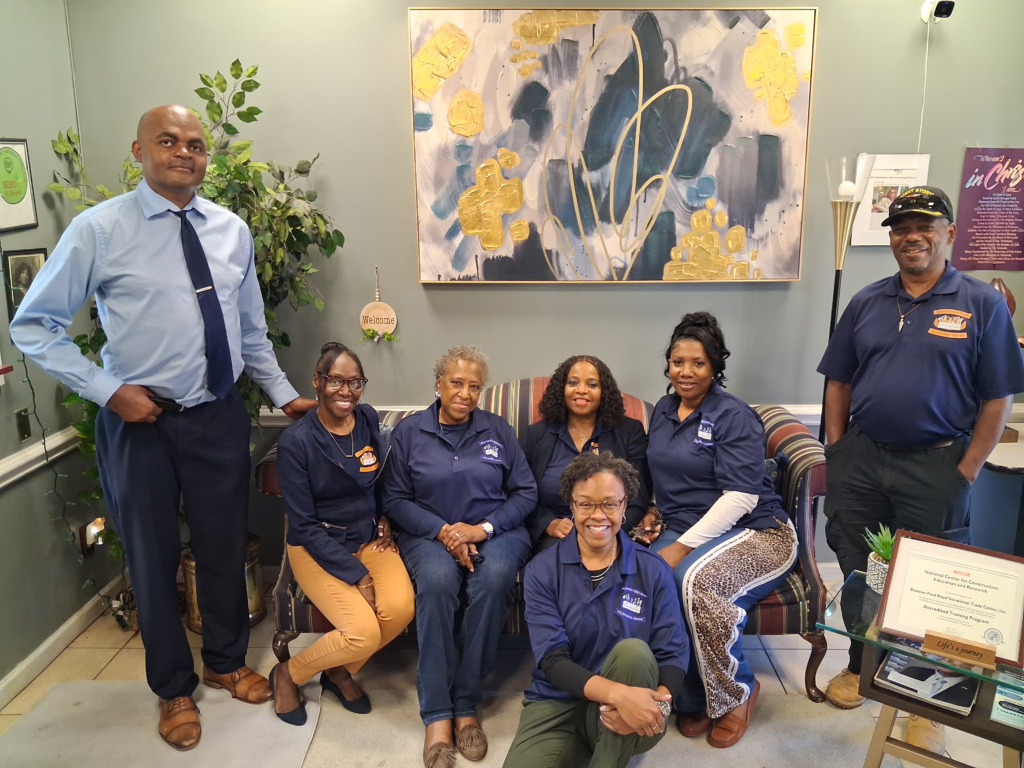
Hall, CEO of Beatties Ford Road Vocational Trade Center, is the architect of the event. “Unity in the Community” is a day of fun where residents can also connect with local organizations, like Hall’s, that provide programs and services to help families thrive.
“We’re at ground zero,” Hall explains. “We’re right in the community where all the decline is and the poverty is. But we’re also where the talent is. We have so many young people coming out of high school, but they don’t know what they’re capable of. They can help keep America alive.”
Beatties Ford Road Vocational Trade Center (BFRVTC) helps turn that promise into purpose, offering students training in electrical, HVAC, plumbing, carpentry, emerging construction technologies, and more.
Dignity: the connection between mental health and work
While four generations of her family have worked in construction, Hall did not set out to start a school to supply talent to the sector. Rather, BFRVTC grew organically out of a problem Hall observed in Beatties Ford Road neighborhoods: young people lacking direction because they had not been given chances to identify, explore, and build their unique talents.
The result was hopelessness, Hall says.
About 20 percent of adults living in North Carolina, including 31 percent of young adults, have experienced a mental health challenge. Sixteen percent have struggled with a substance use disorder. In 2007, Hall decided to help solve these challenges. While serving as president of C2 Construction and Drywall Company, she founded the Beatties Ford Road Family Counseling Center, a state-licensed mental health and substance abuse agency.
Hall knew patients’ personal struggles were connected to educational and economic deprivation. She had seen similar challenges in her own family, but found direction for herself in the skills her grandfather, a brick mason, taught her.
“Because I knew a trade, the construction industry actually kept me and the children out of poverty,” Hall says.
The launch of Beatties Ford Road Vocational Trade Center
With her own story in mind, and her sons Willie and Donnell Dixson and other Charlotte-area construction industry leaders at her side, Hall took on another challenge: starting a vocational school. BFRVTC opened in November 2017 on the same campus as the counseling center.
Today, more than 98 percent of students who enroll in BFRVTC graduate and find employment.
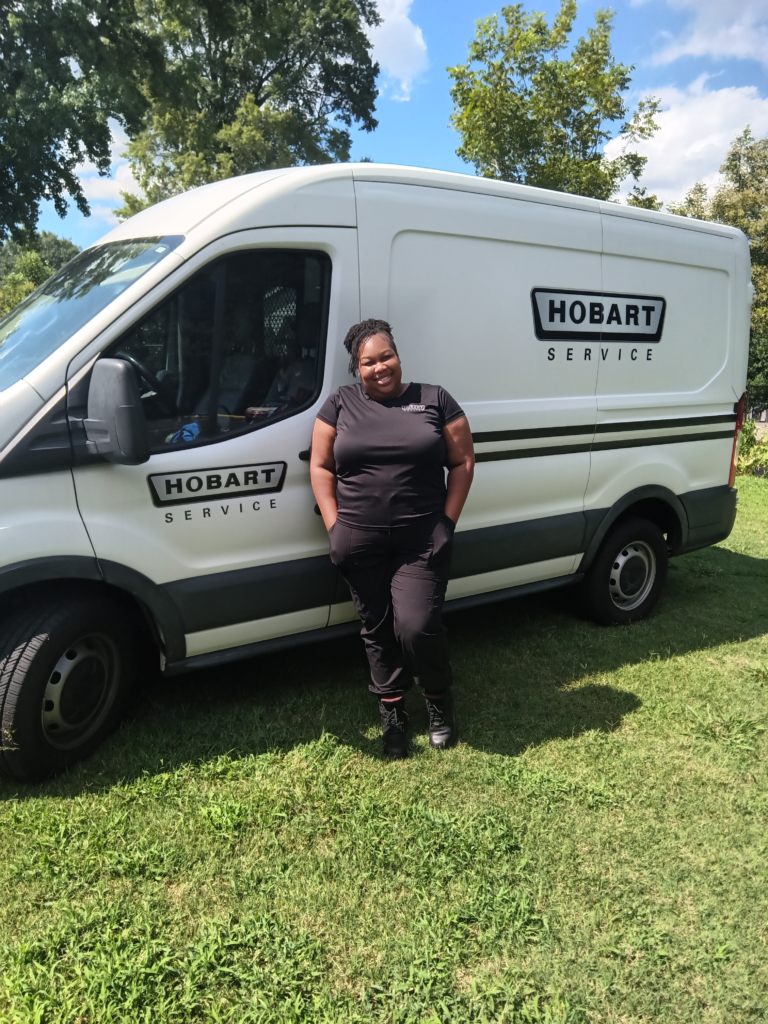
Graduates include Brittney, a single mother who obtained HVAC training through BFRVTC. Today Brittney is employed, owns a condo, and her daughter — who hopes to one day be a doctor — is enrolled in her school’s gifted program.
In addition to helping residents find pathways into meaningful work, the school serves an industry hungry for young talent. Hall notes that the share of younger workers (those aged 19-24) in the skilled trades is low — about nine percent, a number that is nowhere sufficient enough to replace workers who are retiring or leaving the industry.
For the local construction industry, schools like BFRVTC mean survival and the ability to keep serving the community.
Bottom-up: students come from the community, and serve the community
The counseling center and BFRVTC work with creative partners to stage events like “Unity in the Community” and run public awareness campaigns that drive patient and student enrollment. Other community stakeholders, including local faith leaders, help connect students to BFRVTC.
“People aren’t just going to come looking for your program,” Hall says. “You’ve got to open your doors and go out into the community.”
Even with a stable of partners, it is not unusual for Hall to personally help enrollees at BFRVTC. When one formerly justice-involved student could not make it to a job interview because he did not have a driver’s license, Hall drove him to the DMV and lent him her truck for the test. The student graduated, got the job, and has continued to excel in commercial construction.
That former student is also married, a homeowner, and recently hosted a construction-themed birthday party for his toddler.
“He’s not going to get back into the justice system because he has a flourishing life,” Hall notes.
Employers need to “put skin in the game”
Hall also spends much of her time talking to, and building strategic relationships with, regional employers. These conversations ensure BFRVTC provides industry-relevant training and help create and sustain direct job placement pathways for graduates.
“I tell employers they have to put some skin in the game,” Hall says. “Get involved with schools like ours that are dealing with underlying issues like poverty and mental health. Employers don’t often have onsite mental health counselors, onsite substance abuse counselors, but we do. So if you get involved with us, we can get people ready for employment with you.”
In addition to training in the skilled trades, BFRVTC provides structured life-coaching resources, character development, and ongoing mentorship to support student retention and personal growth. For justice-involved residents, the training center operates specialized support services that connect these citizens directly to skilled trades training.
Full circle: a new curriculum to unlock human purpose
After 20 years, Hall is still finding new ways to serve her community. She hopes to build a dormitory adjacent to BFRVTC for unhoused youth. Many of the school’s students face housing instability or homelessness and, lacking a safe place to sleep and study, find it difficult to complete their training. Having onsite housing will better equip them to graduate, obtain employment, and find permanent, stable housing.
With philanthropic support from a local resident, Hall and her team also have acquired a 20,000-square-foot facility in Chester, S.C. With her team, she is renovating the site into a state-of-the-art vocational trade school that will serve six rural counties with advanced construction and technology programs.
This fall, BFRVTC will launch a curriculum, the Wholistic Thinking Series, which will include courses on critical thinking, creativity, the power of thought, and more — life skills Hall says will help students develop the self-efficacy, emotional regulation, and personal growth skills needed to live a meaningful life. Hall developed the courses with Professor Mark Anthony Wright who led the Propel Learn Virtual Campus, a program for more than 150,000 Historically Black Colleges and University students that improved learner engagement and outcomes by 80 percent.
Hall believes this curriculum is another way to address the problem she identified nearly 20 years ago: mental illness and substance abuse often arise when people are never given a chance to discover how they can contribute.
“When people are struggling with poverty and mental illness and substance abuse, you have to be a little bit more than just a school,” Hall says. “You have to pack those services in to get students prepared for work.”