






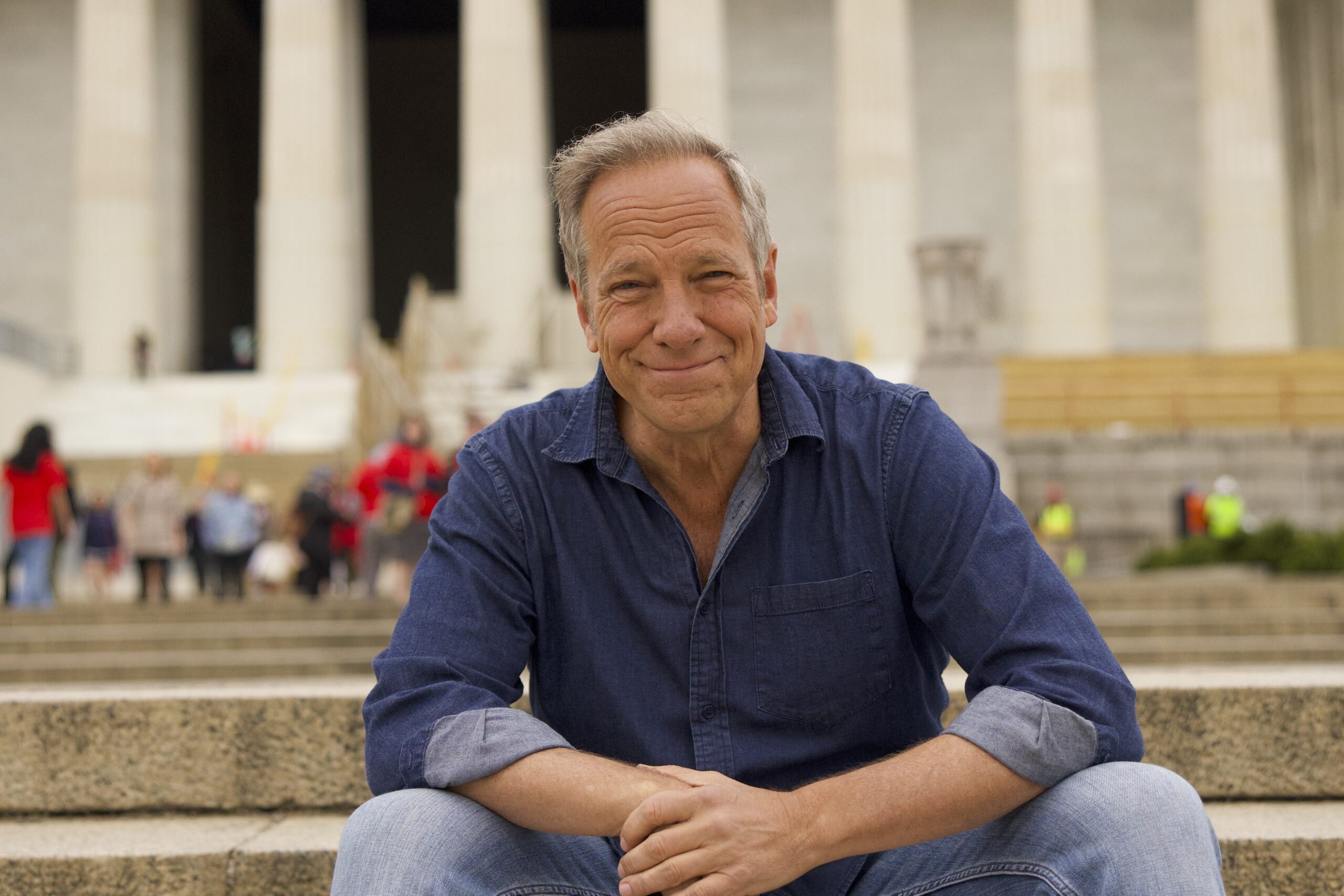
For nearly two decades, Mike Rowe has been laboring to reshape the conversation about work, dignity, and opportunity in America. His popular TV show “Dirty Jobs” and scholarship program has helped thousands of Americans find work in the skilled trades.
Now Rowe is taking his message directly to towns and cities across America. Last fall, the mikeroweWORKS Foundation launched a campaign in North Texas to connect residents with job opportunities at the region’s data centers — or what Rowe himself has called “the engine rooms of the digital economy.” The campaign reached millions of Texans, motivating them to apply for open positions. It succeeded by focusing not just on the paychecks to be had, but by explaining why each employment opportunity mattered and had meaning.
We talked to Rowe about the changing nature of the skills gap, the growing number of executives who are worried about these deficits, and why we should be talking about “dignified jobs,” not “dirty jobs.”
CKF: Before getting into North Texas, set the stage. You started this movement 18 years ago. What does success look like for some of the people your foundation has worked with?
Rowe: You know, I think of my buddy Jake. We helped him with a welding certificate several years ago. He wound up in the Gulf of Oman underwater welding for three years, making $300,000 a year. Here’s a 28-year-old guy who now has $1 million in the bank, and the girl said yes, and the first kid is on the way, and he doesn’t have any debt. And his work has national security implications.
CKF: Incredible. Let’s turn to another industry that has major implications. Did you choose North Texas for this campaign because of the opportunities you see there?
Rowe: In North Texas, you’ve got data centers desperate to hire. In Plano, if you’re an electrician, you’ve got companies trying to poach you. You’re like a major athlete being scouted.
North Texas is also where one of our most enthused partners, Wells Fargo, is headquartered. Banks aren’t really known for having big frontline skilled labor shortages, but they reached out, and now we’re seeing a lot of other similar companies do so as well. It’s like a memo went out to the C-Suite, and a whole new category of employers are paying attention to workforce gaps.
CKF: What lightbulb finally went off for these executives?
Rowe: There are two things. For a long time, the narrative was, “The robots are coming, and they’re going to take all the trade jobs” — the welding jobs and such. That didn’t happen, but now you have young people saddled with $1.7 trillion in student debt, and they’re worried AI is going to take their jobs. The second thing is just the graying of the population. We’re barely at replacement rate in this country. For every five tradesmen who retire, two come in. The overall demographics are against us.
So, it’s $1.7 trillion in student debt, over seven million open positions, most of which don’t require a four-year degree, and nearly seven million able-bodied men in prime working age who are not only not working, but who are not looking for work. The workforce is just wildly out of balance. This math trumps everything. There’s not a week that goes by where I don’t hear from a leader in a consequential industry who is freaking out about workforce issues.
CKF: Which is why you’re now expanding beyond North Texas?
Rowe: Yes, we’re in Pennsylvania and Michigan now and going to Wyoming and the Dakotas next. We’ll have different partners in each state, and our messages will be based on needs in those communities. We’re beguiled by the notion of a cookie cutter response. We’re so in love with the idea that there’s a playbook for curing the skills gap, and that if we just do this, this, and this, everything is going to work out. I wish it were true. Personally, I think we’re in the jam we’re in because we tried to fit people into boxes for too long.
CKF: We will get back to those boxes in a moment, but first, while you said these campaigns will respond to local needs, they also fit into the larger national economic conversation. How so?
Rowe: If you want to see manufacturing reinvigorated and reshored, we need to do something about the 500,000 open positions right now that American manufacturers cannot fill. We need 400,000 electricians or we don’t get data centers. Our infrastructure doesn’t get built because we don’t have the human beings to do the work. If we don’t have people skilled at AI we lose to China, so the skills gap is a national security issue, too.
These campaigns educate people about these jobs and why they matter. If you’re trying to call people’s attention to the fact that the country has a giant problem and we need to fix it, that’s a different proposition than just saying, “Hey, there’s some opportunities over here that you probably didn’t hear about.”
CKF: You’re connecting people to the purpose they can find in these jobs.
Rowe: Yes, and, you know, I think there’s a reason “Dirty Jobs” is still on the air after 22 years. You see people on that show who don’t need any feedback. They know how they’re doing because their work speaks for itself. They’re surrounded by visual cues. My desk looks the same at 6 p.m. as it does at 6 a.m. There’s nothing here to let me know when I’m done. But on “Dirty Jobs,” you always know, right? And more importantly, those people — who were often laboring out of sight and out of mind — they all know that if they called in sick for a week or two, the party’s over. That’s meaningful work. It can be dirty. Sometimes it is dangerous, but it is meaningful.
CKF: As you have said, employers have seven million unfilled jobs right now — and those jobs matter. So, how do you think we got here?
Rowe: The stigmas and the stereotypes and the myths and the misperceptions about what a career in the skilled trades looks like, they’ve all conspired to make those careers less aspirational. Eighteen years ago, if you suggested a path other than college, it was heretical. So, the conversation calcified and was forced into a polemic.
I definitely don’t want to be misunderstood. I’m often painted as this anti-college guy who just wants to dismiss all the liberal arts stuff. I’m not. I have a liberal arts degree. It served me really well, and I’m glad I have it. I don’t do anything with it specifically, but I do everything with it tangentially.
If we want our kids to think critically, they need to understand Nietzsche and Descartes. They need to understand Western Civ. But this idea that we can’t do that, and learn a trade, is a real failure. What our country needs are more philosophers who can run an even bead and more welders who can talk intelligently about Plato. It’s crazy to have separated the two sides with such determination. Palantir is trying to correct this. They’re putting high school graduates on big consequential engineering projects, teaching them a trade, but they’re also putting them through a Western Civ survival guide.
CKF: You have said that the era of “white” versus “blue-collar” jobs is over. Is that what you’re getting at here?
Rowe: What I mean is that if we come at opportunity through the lens of, well, this job is blue collar and this one is white collar, then I think we just limit ourselves. I think AI is going to make fools of us with regard to that old trope. AI doesn’t care what color your collar is. AI is going to have an impact on every job. And, you know, I think of mechanics today that we’ve helped train. When I was a kid, I could do my own brakes and change my oil. I can’t even open the hood now. I don’t know what I’m looking at. So that kid today working in a sophisticated garage, is he really blue collar? He’s really a software engineer. So yeah, I think the color of collars is done.
The best definition I can come up with for “dignified work” is work that blesses somebody else. It doesn’t matter if it’s freelance, gig economy, paycheck, union, non-union. If you’re working in a field that is improving somebody else’s life, then you have a dignified job.
CKF: Is there a message for employers in there? For employers who have jobs open, is it important to talk about the purpose and meaning they’ll find through a job?
Rowe: Yes, they must tell people what their labor will result in. They must show them. That’s what “Dirty Jobs” did. I still remember driving around with a mason after working with him all day. And he’s showing me a façade he helped build. At one point, he’s weepy just driving around town, showing me why what he does matters. If we can get people reconnected to that, I think that’s a step in the right direction.
NOTE: This discussion was edited for length and clarity.