






As the United States enters the final days of a heated political campaign season, is it possible for Americans to air their political and policy grievances in a dignified and productive way?
Leaders at the Institute for Humane Studies (IHS) know it is, which is why they are helping U.S. college and university students exercise their muscles for civic debate — while inspiring the next generation of scholars in law, economics, and political philosophy.
To mark the 250th anniversary of the Declaration of Independence, IHS, a Charles Koch Foundation (CKF) partner, provided support through its Free Society Grants program to faculty at the University of Houston and the University of Central Arkansas to support new and existing programs that examine how freedom can remain resilient during periods of political and institutional strain.
Hungry for rigorous and respectful debate, students students were eager to engage.
University of Central Arkansas: Encouraging the conversations that help countries and communities thrive
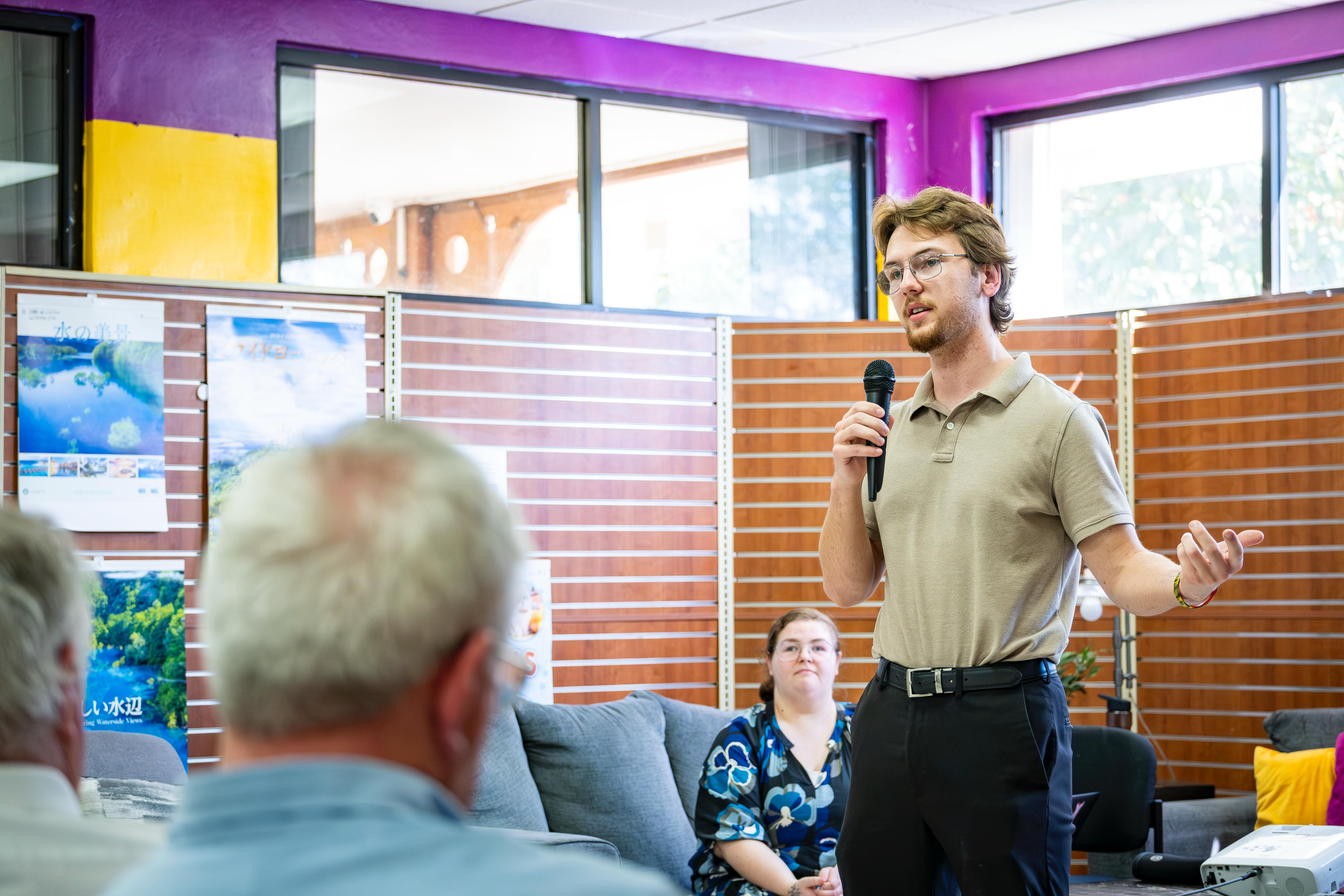
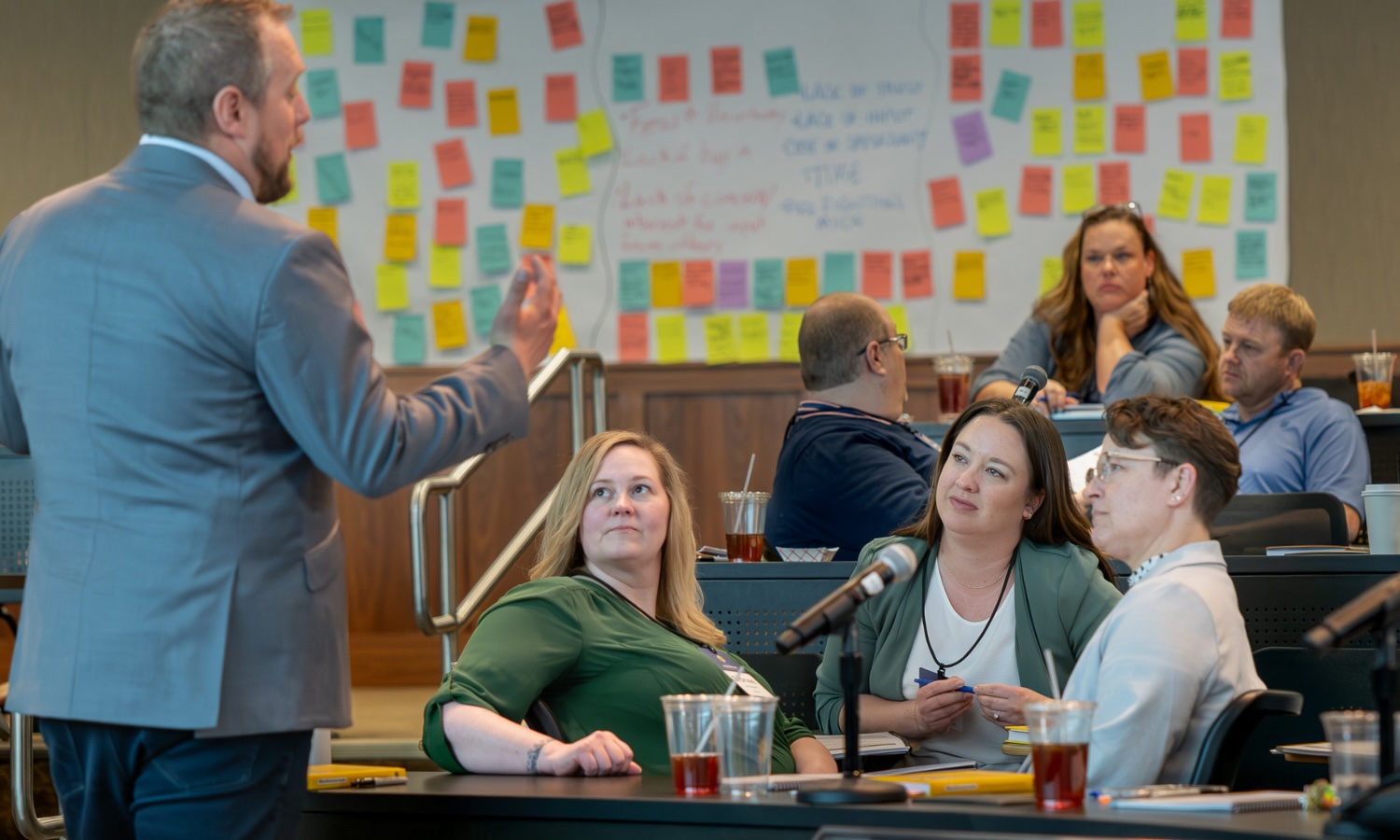
The University of Central Arkansas’ (UCA) Arkansas Center for Research in Economics (ACRE) helps students discover how ideas like self-actualization, openness, and human dignity shape the American experience and the nation’s economy. With support from IHS, Dr. Jeremy Horpedahl, UCA associate professor of economics and ACRE director, along with Dr. Colin Hodges, facilitated a spring 2026 reading group focused on the Declaration of Independence and the American founding. Students met 10 times to discuss readings with Dr. Hodges, and they traveled to Southern Methodist University for debates with students in Dallas.
Horpedahl says that while the Declaration’s 250th anniversary provided inspiration for the IHS grants, the scholarship was particularly well-timed.
“We have been running reading groups for over a decade, but right now they are more important than ever,” argues Horpedahl. “The overriding principle in our groups is that we can learn from each other by disagreeing and having good dialogues. We are also trying to always get students to understand the principles and ideas that make societies flourish, economically and in other areas of life.”
Students like Leopold Heinz who participated in the reading group say they found new ways to engage with their fellow students and with American principles.
Heinz came to UCA from Germany because he liked the weather, southern hospitality, and the culture. What he found was a desire to ask and answer big questions about what has made the United States successful. “Why is this country so much better off than so many other countries?” he asks. “What are the underlying forces that help us understand what good or bad economic policies are?”
The group gave Heinz an opportunity to compare the world’s oldest, continuous modern democracy, the United States, to younger democracies like the one in his native Germany, and to debate what works and does not work in different systems of government.
The simple act of having these discussions creates a more resilient nation, Heinz says. “For people like me who are coming here and engaging in academic discourse, and simply trying to make the world a better place, I think the spirit of this country is to attract people who want to do something good and meaningful in society,” explains Heinz. “We are better equipped to achieve that when we get to learn from people with different backgrounds.”
For Lillian Held, the reading group demonstrated how essential deep conversations are not just to civic and economic life, but to personal happiness as well.
“The reading group is one of the few places on campus where you can have true open discussions about economics, about policies, about markets,” says Held. “There’s something really important about being able to discuss these topics and disagree but still know you have a friendship and a connection with someone and see that we both want what’s best for people.”
Held, a senior who plans to pursue a PhD in economics, also met her fiancé in an ACRE reading group. She says her experiences in the program, including the reading group on the founding documents, helped her recognize the type of partner she wanted. “We agree on a lot of principles,” says Held. “But we also know we can disagree.”
University of Houston: Inspiring future scholars of the founding
The Lyceum Initiative at the University of Houston is a year-long civic education program supported by IHS. Centered on the 250th anniversary of the Declaration, the initiative features a national speaker lecture series, undergraduate-faculty colloquia on founding era texts, student-led reading groups, and research fellowships for students.
Conner Knight and Taura Borman each completed a research fellowship, but the ideas they explored expressed themselves in very different ways.
Knight examined the Texas Constitution in relation to the Declaration of Independence, articulating where the documents agreed and where they were in tension when it comes to fundamental rights. One principle where Knight says the two documents were in harmony: the idea that the governments cannot create undue economic pressures that oppress people.
Knight’s research will be included in educational materials The Lyceum Initiative’s director, Dr. Dustin Gish, hopes to contribute to Texas primary and secondary school classrooms.
Noting The Lyceum Initiative is one of the few opportunities outside the university’s Honors College for undergraduates to engage in rigorous research, Knight says the experience was “empowering.”
“It was a way for us to accrue research skills, to have the confidence to seek information, and to be curious about our findings,” explains Knight. “It also led to a certain ethic that Dr. Gish is trying to revive: to be civically oriented and minded — to go out into the world and be useful to our country in some way. The research was a very direct way for us to engage with the ideas that undergird this country.”
For junior Borman, The Lyceum Initiative offered a chance to explore the principles of the American founding through one of her first loves: music. In addition to authoring a paper on the virtues of the Declaration that she presented at a conference at the University of Dallas, Borman composed a piece inspired by the structure of, and ideas presented in, the Declaration.
“Equality, natural rights, prudence. I’d never read a document that articulated these principles and these ends in such a beautiful way,” says Borman, who has been taking classical piano instruction since age four. “I embedded a lot of harmony in the piece in the beginning and then as we get to the facts to be presented to a candid world, I started picking up the pace a little bit to show urgency. The section inspired by the grievances gets even more intense.”
Borman performed her composition at a Lyceum Initiative event and plans to compose another piece about the American Revolution after she takes the LSAT. (Now a senior at the university, Borman hopes to attend law school next year and later pursue a PhD.)
Gish envisions his program as the first phase of a decade-long series commemorating America’s founding era and culminating in the establishment of a permanent Center for American Constitutionalism and Civic Education at the university. He says he is eager to revive civic education as an essential aspect of liberal education at the University of Houston.
“The founding charter of our university as a public institution for the education of citizens calls for this in its mission,” says Gish. “If we, as Americans, are to overcome the grave deficit in civic literacy and civil discourse in our country today, we must restore a proper understanding of our founding principles and history to our students — this younger generation in whose hands we are placing our future needs a civic education that will inform and inspire them to be active and patriotic citizens.”